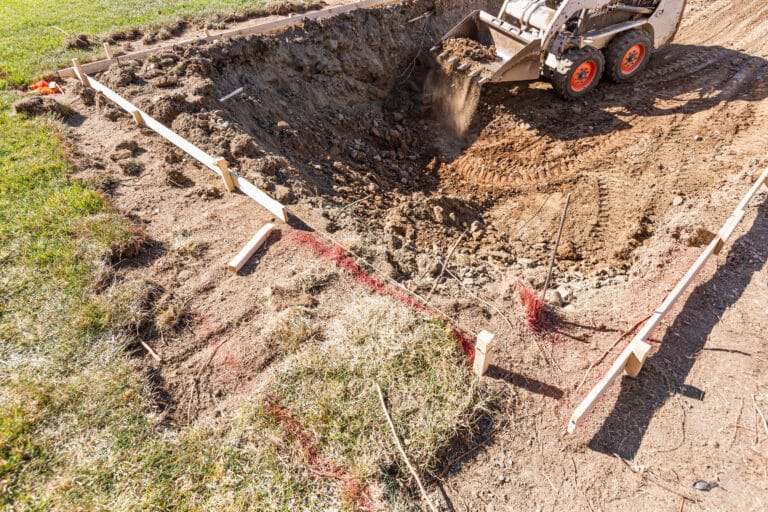
Winter demolition in Houston runs on tracked equipment more than wheeled equipment. Rain-soaked clay soil turns job sites soft between December and February, and tracked excavators and skid steers spread weight over more surface area so they don't sink or rut the yard. Wheeled loaders and dump trucks still work, but only on sites with solid access.
Most articles on demolition equipment just list machines: excavators, wrecking balls, skid steers, done. None of them explain why a Houston crew might swap machines for the exact same job in July versus January. Ground conditions do.
What Equipment Houston Crews Use for Winter Demolition (Quick Answer)
Demolition equipment ranges from full-size excavators down to hand tools, and the choice depends on the structure, the site, and, in Houston, the season. Here's the core lineup and how winter affects each one.
| Equipment | Main Use | Winter Note |
|---|---|---|
| Tracked excavator | Full structural teardown | First choice on wet ground; low ground pressure |
| Skid steer (tracked) | Debris handling, tight-access work | Preferred over wheeled models on soft sites |
| Hydraulic shears/breakers | Concrete, steel, selective removal | Used for freeze-damage repair jobs |
| Wheeled loader/dump truck | Hauling, load-out | Needs firm, well-drained access routes |
| Hand tools | Interior strip-outs, small selective jobs | Unaffected by ground conditions |
Why Ground Conditions Decide the Equipment
A Terramac comparison puts a fully loaded tracked crawler carrier at about 5.1 psi on the ground, compared with approximately 35 psi for a wheeled vehicle. That difference is the whole reason tracked equipment exists for soft-ground work, and it is why our dispatch defaults to tracked machines the moment a site has been wet for more than a day or two. Read the Terramac ground-pressure comparison.
Pro Tip: If you're getting quotes for a winter teardown, ask whether the crew plans to use tracked or wheeled equipment on your site. A wheeled-only fleet on a soft lot usually means delays, ruts, or an added charge for track mats.
The Core Equipment Lineup Year-Round
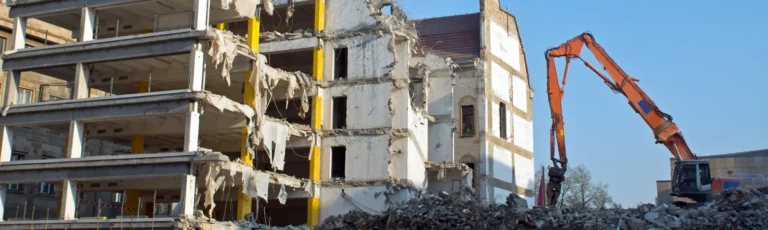
Most demolition projects use some combination of an excavator for the structural teardown, a skid steer for moving debris around the site, and hand tools for anything selective. Wrecking balls are rare outside large commercial jobs. The mix doesn't change season to season, only which version of each machine, tracked or wheeled, makes sense for the ground. Our complete guide to building demolition covers the full process, from permits through debris haul-off, if you want the bigger picture beyond equipment alone.
Why Winter Changes the Equipment Choice in Houston
Houston doesn't get the frozen ground that firms up soil in northern states. It gets rain on top of clay that barely drains, and that's a different problem entirely.
Wet Clay, Not Frozen Ground
Houston averages 4.03 inches of rain in December and 3.76 inches in January (NOAA climate normals for Bush Intercontinental Airport). That rain lands on expansive clay soil, and clay is exactly the soil type ground-protection specialists flag as the fastest to turn soft and saturated once winter rain sets in. Job sites stay soft for days after a storm, not hours, and a wheeled loader that handled an October job without issue can rut the same lot in January.
Did You Know? Houston’s clay soils can hold water after rainfall, which is why drainage and ground protection matter when heavy equipment is working on a demolition site.
What We Watch For Before Sending Equipment Out
Our dispatch checks two things before a winter job: how much rain has fallen in the last 72 hours, and how the site drains. A lot with a slight grade and gravel access can still take wheeled equipment. A low, flat lot that holds water gets tracked machines by default, sometimes with track mats laid down first to protect the equipment and the property.
When Freeze Damage Changes the Job
Houston gets occasional hard freezes, and when one causes real structural damage, the equipment list shifts again.
Emergency Selective Demolition After a Hard Freeze
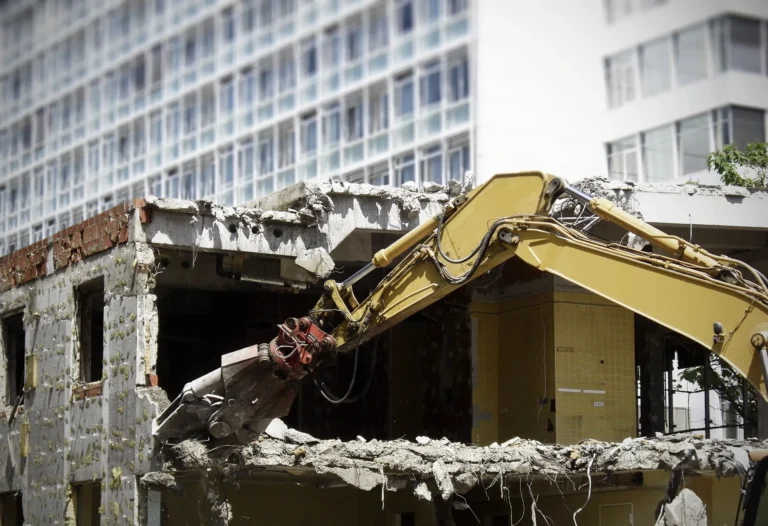
A burst pipe that soaks a ceiling or wall enough to cause sagging or collapse isn't a full teardown. It's a selective job, and it usually calls for hydraulic shears or a smaller breaker attachment instead of a full-size excavator. The goal is removing the damaged section cleanly without disturbing what's still sound.
Pro Tip: If a freeze causes visible sagging in a ceiling or wall, don't wait to see if it dries out on its own. Call a crew to assess it. Waiting can turn a small selective removal into a much larger structural job.
Small Equipment for Small, Precise Jobs
Interior strip-outs, whether from freeze damage or a planned renovation, mostly use hand tools and small equipment. A full-size excavator has no place inside a house. That distinction matters most in winter, when freeze-related calls mix in with planned teardowns on the same schedule.
Matching Equipment to Your Winter Project
Full Teardown vs. Selective Demolition
A full residential or commercial teardown calls for a tracked excavator and a skid steer for debris handling, with hauling equipment brought in once access allows. A selective job, freeze damage, a partial renovation, a single outbuilding, uses smaller equipment and a lighter footprint on the site. Our demolition cost guide breaks down how that scope difference affects pricing.
When Track Mats Get Added to the Job
On sites that stay wet for extended stretches, crews lay temporary track mats to distribute weight further and protect landscaping, driveways, or septic lines underneath. It's an extra step, but it's cheaper than repairing ruts after the fact.
Frequently Asked Questions
Does Houston's weather really change what demolition equipment gets used? Yes. Wet winter rain on clay soil makes job sites soft for days at a time. Crews shift to tracked excavators and skid steers over wheeled equipment to avoid sinking or rutting the site.
Is a wrecking ball ever used for demolition in Houston? Rarely. Nearly all residential and small commercial demolition in the area uses excavators with attachments instead, in any season. Wrecking balls are mostly limited to specific large-scale commercial or historic demolition projects.
What equipment handles freeze-damage repairs, like a burst pipe collapse? Hydraulic shears or smaller breaker attachments, not a full-size excavator. Freeze damage is usually a selective removal job, so crews bring equipment sized for precision rather than a full structural teardown.
Do track mats add much to a demolition quote? They add a modest cost, but only get used on sites that stay wet for extended periods. Crews assess site drainage before quoting, so it's factored in upfront rather than added as a surprise.
Can wheeled equipment still be used for winter demolition? Yes, on sites with solid, well-drained access and no standing water. The equipment choice comes down to ground conditions at that specific site on that day, not the calendar date or season alone.
The Bottom Line
Winter demolition in Houston isn't about frozen ground, it's about wet clay that stays soft for days after a normal rain. Tracked excavators and skid steers handle that ground better than wheeled equipment, and freeze-damage repairs call for smaller, more precise tools than a full teardown. Knowing which equipment fits your site and your project keeps a winter job on schedule instead of stuck in the mud.
Planning a demolition project this winter? Get a free site assessment from Right On Time and we'll tell you exactly what equipment your job needs before the crew ever shows up.