Before a single wall comes down on a Houston demolition project, three questions come up almost every time: What method is right for my structure? Do I need a permit? And what happens to all the debris? This guide answers all three — plus everything else you need to know to plan a building demolition from start to finish, whether you’re tearing down a single-family home or a commercial building.
What Is Building Demolition?
Building demolition is the controlled process of bringing down a structure — partially or completely — so the property can be repurposed, rebuilt, or cleared. It’s not just about knocking things over. A well-executed demolition involves planning, permits, hazardous material surveys, the right equipment for the structure type, and a plan for debris disposal before the crew ever touches a wall.
The method used depends on the structure’s size, materials, location, and what the property owner needs to do with the land afterward.
The Four Main Methods of Building Demolition
Question: What are the main types of building demolition? There are four primary methods: mechanical demolition, implosion, deconstruction, and selective (interior) demolition. Each serves a different purpose and scope.
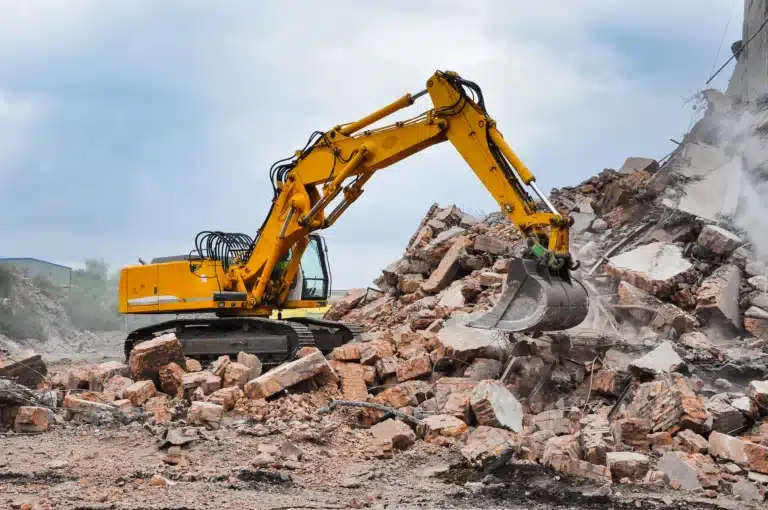
Mechanical demolition is the most common method for residential and mid-size commercial structures in Houston. An excavator — sometimes fitted with a hydraulic shear, crusher, or standard bucket — breaks apart the structure systematically. It’s fast, cost-effective, and works well on wood-frame and light steel buildings. Most single-family home teardowns in the Houston area use this method.
Implosion uses strategically placed explosive charges to bring a building down into its own footprint. It sounds dramatic — and it is — but it’s only practical for large structures like high-rises or industrial facilities where there’s enough clearance and the math supports the cost of the engineering, permitting, and safety perimeter. It’s rarely used for residential work.
Deconstruction is the methodical, manual disassembly of a building to recover and reuse materials. Lumber, brick, fixtures, and hardware are carefully removed before any heavy equipment arrives. It takes longer and costs more than a mechanical demo, but it can yield salvage credits and is worth considering when the structure has reusable materials.
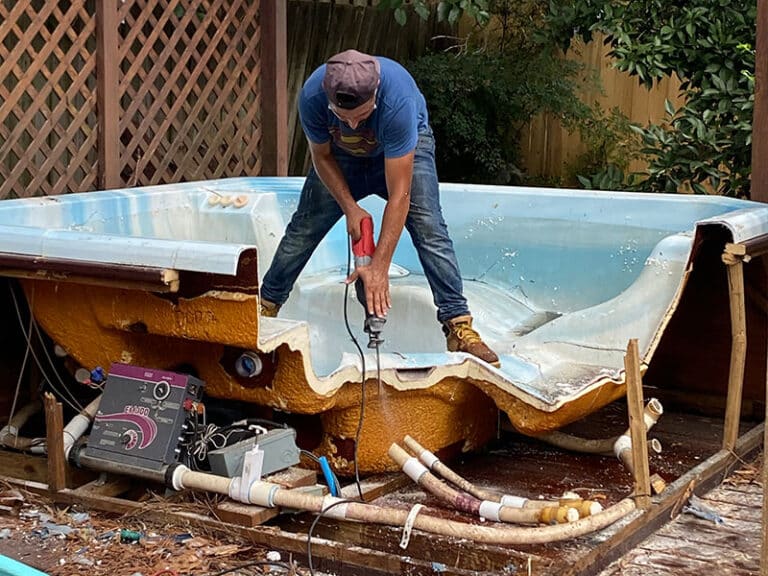
Selective (interior) demolition targets specific elements — a load-bearing wall, a kitchen gut, a bathroom strip-out — while the rest of the structure stays intact. This is the standard approach for remodels and renovations. It requires careful planning to avoid damaging electrical, plumbing, or structural systems nearby.
Pro Tip: One of the most common mistakes we see on residential projects is a property owner assuming their remodel needs full structural demo when selective interior work would get the job done at a fraction of the cost. Always have a contractor walk the space before committing to a scope.
Do You Need a Permit to Demolish a Building in Texas?
Question: Do I need a permit for building demolition in Texas? Yes. In virtually every Texas municipality — including Houston — a demolition permit is required before any structural removal begins. Skipping this step can result in stop-work orders, fines, and liability issues that far outweigh the permit cost itself.
In Houston, the permit process goes through the Houston Permitting Center. Typical fees range from $200 to $850 depending on project scope. The application requires a site plan, contractor license information, and confirmation that utilities have been disconnected. A licensed master plumber must also complete and finalize the sewer disconnect before a demolition permit can be issued — this is a specific Houston requirement that catches many first-time clients off guard. Most licensed demolition contractors handle the permit application on your behalf as part of their standard process.
Utility disconnection is a related requirement that often surprises first-time demo clients. Gas, electric, water, and sewer lines must all be properly capped or terminated by the respective utility providers before demolition begins. This step typically takes two to four weeks to coordinate, so it should be factored into your project timeline early.
Did You Know? Structures built before 1978 in Texas may contain asbestos or lead-based paint. Under EPA NESHAP regulations, an inspector must survey the property and clear it — or arrange for licensed abatement — before demo crews can start. Skipping this step isn’t just illegal; it creates serious health exposure for your neighbors and crew.
Demolition Safety: What a Professional Crew Manages So You Don’t Have To
A professional demolition contractor manages a long list of safety considerations that most property owners don’t think about until something goes wrong: load-bearing structure identification, proximity to neighboring buildings, vibration monitoring, dust suppression, equipment staging, and site security barriers. These aren’t optional extras — they’re standard operating procedure on any licensed job site.
The hidden danger in DIY or under-licensed demo work is structural instability. A wall that looks non-load-bearing may be carrying roof load through a header that isn’t obvious from the finished side. Our crews identify and confirm load paths before any wall comes out, which prevents the partial collapses that send people to the hospital on amateur projects.
Houston’s soil conditions add another layer of complexity. The clay-heavy ground common throughout the city means that heavy equipment movement near existing foundations requires monitoring — especially on infill lots where structures sit close together.
According to OSHA’s demolition standards (29 CFR 1926 Subpart T), licensed contractors are required to conduct an engineering survey before demolition begins to assess the condition of framing, floors, and walls. Failure to document that survey in writing is one of the most frequently cited OSHA violations in the demolition industry — and the most common reason amateur projects go sideways fast.
Did You Know? Improperly disconnected utilities are widely recognized by OSHA and safety organizations as one of the leading causes of serious injuries and project delays on demolition sites. Confirming all disconnects are complete — gas, electric, water, and sewer — before breaking ground is non-negotiable on every job Right on Time crews touch.
What Happens to Debris After a Building Demolition?
Question: What happens to demolition debris? Debris is sorted on site: recyclable materials like metal, concrete, and clean wood are separated for recycling or salvage, and the remainder is hauled to a licensed landfill or transfer station. A well-run crew minimizes what goes to the landfill.
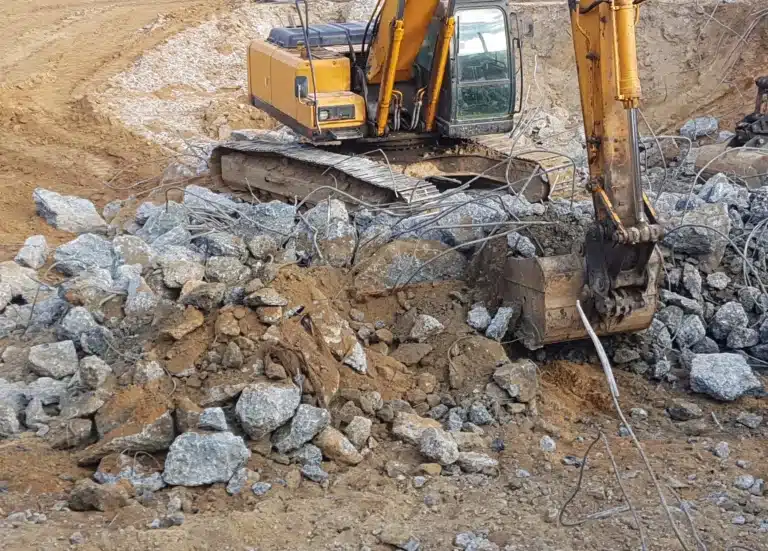
Concrete is often crushed on site or hauled to a concrete recycling facility where it becomes road base or fill material. Structural steel and rebar go to scrap yards. Wood framing from structures without hazardous materials can sometimes be chipped into mulch or offered to salvage operations. Brick from older buildings often has resale value if removed carefully.
The debris disposal component of your project should be explicitly included in your contractor’s quote. Hauling and disposal can represent 20 to 30 percent of total project cost on a standard residential teardown, and quotes that exclude this line item are often the ones that come back with surprise invoices at the end.
For clients who need junk removal and site cleanup after demolition — clearing leftover materials, furniture, or site waste before the next phase — Right on Time handles that as a separate or bundled service.
Pro Tip: Ask your demolition contractor to provide a debris disposal manifest or confirmation that waste was taken to a licensed facility. Some cities in Texas require this documentation for permit closeout, and it protects you if environmental questions come up later.
How Long Does Building Demolition Take?
For most residential structures in Houston — a single-family home or detached garage — the physical teardown takes one to three days. Debris hauling adds another one to two days. Total project timeline from permit approval to cleared lot is typically two to three weeks when you account for permit processing and utility disconnection scheduling.
Larger commercial projects run longer. A multi-story commercial building may take two to four weeks for demolition alone, with additional time for abatement if hazardous materials are present.
The biggest timeline factor that surprises clients isn’t the demo itself — it’s the pre-demo preparation. Utility disconnects, permit approval, and hazmat surveys are the steps that stretch a project. Planning for these four to six weeks in advance of your target start date keeps projects on schedule.
Getting Ready to Move Forward
Demolition is a complex project with a lot of moving parts — but with the right contractor managing permits, safety protocols, and debris disposal, it runs smoothly. The key is starting the conversation early, knowing your structure type and build year, and working with a licensed crew that handles the full scope.
Planning a demolition in Houston? The Right on Time Demolition Team provides free, no-obligation estimates for residential and commercial projects throughout the area. Call (832) 869-9101 or request your free estimate online today — we’ll walk the site with you and give you a clear, itemized quote with no surprises.
Frequently Asked Questions
What is the most common method of building demolition? Mechanical demolition using an excavator is the most widely used method for residential and commercial structures. It’s fast, cost-effective, and appropriate for most wood-frame and light-steel buildings. Implosion is reserved for large structures like high-rises.
How much does building demolition cost in Houston? Most residential demolitions in Houston range from $6,000 to $22,000 depending on structure size, materials, and whether hazardous abatement is needed. Commercial projects are typically priced per square foot, ranging from $7 to $24. Get a free itemized estimate before committing to any contractor.
Do demolition contractors handle permits in Texas? Yes, most licensed demolition contractors in Texas handle the permit application process as part of their standard service. Permit fees in Houston typically run $200 to $850. Always confirm permit handling is included in your contractor’s scope before signing anything.
How do I know if my building has asbestos before demolition? Any structure built before 1978 should be tested for asbestos and lead paint before demolition begins. A licensed inspector performs an asbestos survey and provides clearance documentation. If asbestos is found, a licensed abatement contractor must remove it before demo crews can start work.
Can I keep materials from my demolished building? Yes. Before demolition begins, you can request that specific materials — lumber, brick, fixtures, or hardware — be set aside for salvage. Some contractors also offer a salvage credit, deducting the value of recoverable materials from your project quote. Ask about this option when requesting your estimate.